
GoKart: A Mario Kart-Style Racer That Auto-Pilot Built in an Afternoon
Give Agent!'s Auto-Pilot one goal - "create a Mario Kart clone called GoKart" - and come back to a Godot 4 racer with three tracks, eight items, AI rivals and 3,344 passing test checks. Two days and 87 agent commits later it is GoKart 0.0.2, with four courses, Battle mode, Time Trials and a Mario Kart 64 style menu. Here is what the log says actually happened, including the parts where it got stuck.
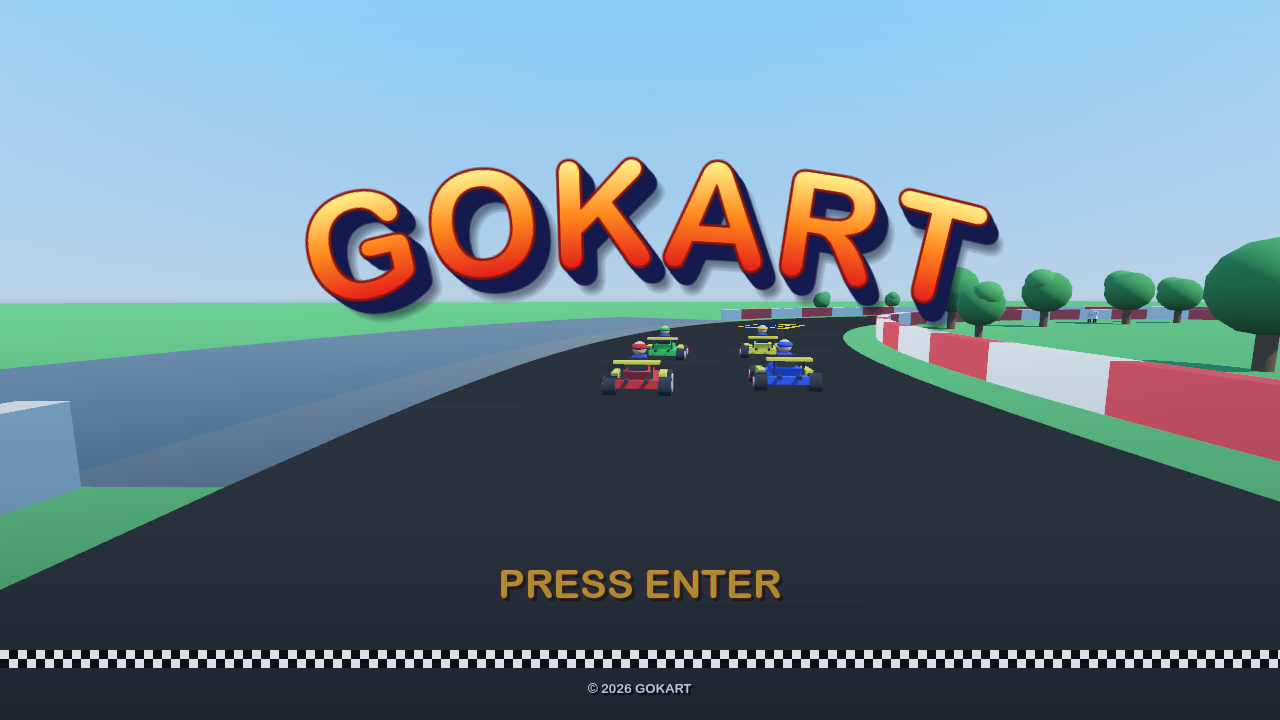
Updated October 4: the post now follows the story through the two days after that first afternoon, including the evening two Auto-Pilot sessions shared one repo, and ends with the GoKart 0.0.2 release. The screenshots were retaken from the 0.0.2 tag.
Yesterday's post introduced Auto-Pilot: type /auto <goal> into Agent! for Mac and it runs unattended cycles toward that goal until you press Stop All. This post is about what came out the other end when I pointed it at a game.
The goal, pasted more or less as I typed it:
create a Mario Kart clone called GoKart with all Mario Kart effects. I believe Godot 4 can do the Mario Kart effects, but I haven't built any of them yet: drift sparks and boost flames (GPUParticles3D), speed lines and boost blur (screen-space shaders, glow and tonemapping), item effects and tire trails (shaders plus ribbon meshes), kart movement (VehicleBody3D or custom arcade physics). Write unit tests and test the game frequently.
Budget: no time limit, unlimited cycles. The model inside Agent! for every cycle was Claude Sonnet 5.5. The first commit landed at 12:39. By 16:32 the same afternoon the repo had 33 commits, 47 GDScript files, about 5,500 lines of GDScript and shader code, and a unit suite that passed 3,344 checks. Two days later, at the 0.0.2 tag, those numbers had grown to 126 commits, 150 files, about 24,500 lines and 14,134 checks. Every one of those commits is authored by the agent. The whole thing is on GitHub at AgentiLoop/GoKart.
What Auto-Pilot does, one cycle at a time
Auto-Pilot keeps a running log at .agent/autopilot/progress.md inside the project, and every cycle appends what it did, what it assumed, what remains and whether anything blocked it. That log is the source for everything below. I'm quoting it rather than my memory because the log is more honest than I am.
Cycle 1 had no Godot on the machine. It ran brew install --cask godot, symlinked the binary, did git init, and wrote kart_physics.gd as a pure model with no scene dependencies: acceleration, braking, reverse, friction, steering, a drift locked to the direction you started in, and three mini-turbo levels. It chose custom arcade physics over VehicleBody3D on purpose, and said why: "so the Mario Kart handling is easy to unit test." Eleven tests, 17 checks, first commit.
Cycle 2 added the effects I had asked for by name: GPUParticles3D drift sparks coloured by mini-turbo level, exhaust flames, ribbon-mesh tire trails, and a screen-space shader for radial boost blur, speed lines and a vignette. 43 checks.
Cycle 3 built a track. A Catmull-Rom loop resampled every 3 metres, a road ribbon, red-and-white striped walls with colliders, boost pads with a scrolling chevron shader, eight ordered checkpoints and a lap tracker that refuses to count shortcuts or wrong-way laps. One of the new tests is a pursuit bot that drives three full laps using the real physics model. It finished in 1:02.5. 90 checks.
Cycle 4 added item boxes with a rainbow fresnel shader, a roulette, and the first three items: mushroom, banana, and a green shell that ricochets off the walls. Getting hit spins the kart out for 1.2 seconds. 235 checks.
Then it got stuck.
The part where it got stuck
The next cycle started adding AI karts and a headless smoke race, and never came back. The cause, found in the next session, was a single stray tab on line 115 of main.gd: a parse error that made the smoke script spam errors forever, with no time limit on the shell command that was running it.
I pressed Stop All, and started a new session with the same goal plus a note in capitals that I will not reproduce in full. The gist: you got stuck testing the smoke run, do not get stuck, put a time limit on shell.
The second session's first cycle fixed the tab, cut the AI lookahead from 10 road samples to 6 so the AI stopped cutting corners into the inner wall, added a corner-speed limiter, and wrapped every shell run in perl -e 'alarm 100; exec @ARGV', because macOS ships without a timeout command. From then on the log says "all runs were behind perl alarm limits" at the end of nearly every cycle. It learned the lesson from the goal text and kept applying it.
That session ran 15 cycles in about an hour and a quarter, and each one is a feature: start countdown with a rocket-start boost for well-timed throttle; mini-turbo level-up pops and a screen-edge flash; a minimap; the homing red shell and the star; a procedural kart model with spinning wheels, steering front wheels and a driver whose head turns; lightning that shrinks every rival; triple shells that orbit the kart; the blue spiny shell that hunts the leader along the road; a results screen with points; fully synthesized audio with no audio files, from the engine loop to the finish jingle; a title menu with a second track; a lap-count option; a third track; and positional 3D engine hum on each AI kart.
The part where it was honest
What I like most in the log is the pattern of confessions. Agent! cannot look at a PNG, and it said so, cycle after cycle:
The windowed screenshot run logged no errors, but I can't view images, so I haven't looked at how the track or HUD render.
I haven't heard the sounds, and I didn't run the smoke race or the screenshot tool.
I can't view images with my tools, so that review needs a person.
So it tested what it could: headless scene checks that instantiate the real scene and assert on state. Fire lightning, confirm three rivals are at scale 0.5 and spinning and the bolts are cleaned up afterwards. Fire a blue shell at a bunched start grid, confirm the explosion at frame 12 and two karts spinning. Force the player to finish, confirm the autopilot hands the kart to an AiDriver and the results panel shows "1st YOU".
A third session stalled the same way, this time behind a 240-second alarm that was far too generous, and I stopped it after one cycle. Then a person looked. That person was me, and the fourth session's goal was my playtest notes, lightly tidied:
the UI needs to scale with the window. the UI should not be prone to the screen speed effects and blurry. Should be able to use cursor keys. it's not clear when power ups are released. the tops of the walls flicker. Little too hard to steer the kart. hard to keep up with the computer AI karts. maybe have AI difficulty levels Easy Medium and Hard.
One cycle later: canvas-items stretch so the UI scales with the window, the HUD moved to a canvas layer above the speed-effects overlay, arrow keys, Enter and Ctrl for items with an on-screen hint, eased-in steering, a z-fighting fix for the wall stripes (neighbouring red and white segments were fighting over the same pixels, so the white ones got very slightly larger), 4x MSAA, and Easy / Medium / Hard that scale AI top speed to 0.72, 0.85 and 1.0. Tests went from 2,156 to 3,344 checks, partly because it also found and fixed a pre-existing parse error in tests/test_items.gd that had stopped the suite from loading.
The part where it stopped itself
Cycles 2 through 8 of that last session made no code changes. Each one re-read the repo, re-ran the suite, and wrote a variant of the same paragraph:
I couldn't see the result on screen, so I'm not declaring the goal reached. Four items still need a human to try them in the game.
That's the right behaviour. The goal was "the steering feels bad" and "the walls flicker", and no headless test can close that goal. Auto-Pilot has no iteration cap, so it would have kept checking in forever. The session ended after cycle 8, and what GoKart needed next was a playtest, not another cycle. That evening the repo was tagged 0.0.1 and exported for macOS, Windows and Linux.
Two days later: two Auto-Pilots in one repo
On October 3 I came back with a different kind of goal. Not a feature list this time, but a reference:
keep building GoKart to resemble Mario Kart Nintendo 64 version. search Mario Kart N64 or Mario Kart Nintendo 64 and keep improving, iterating, making GoKart better
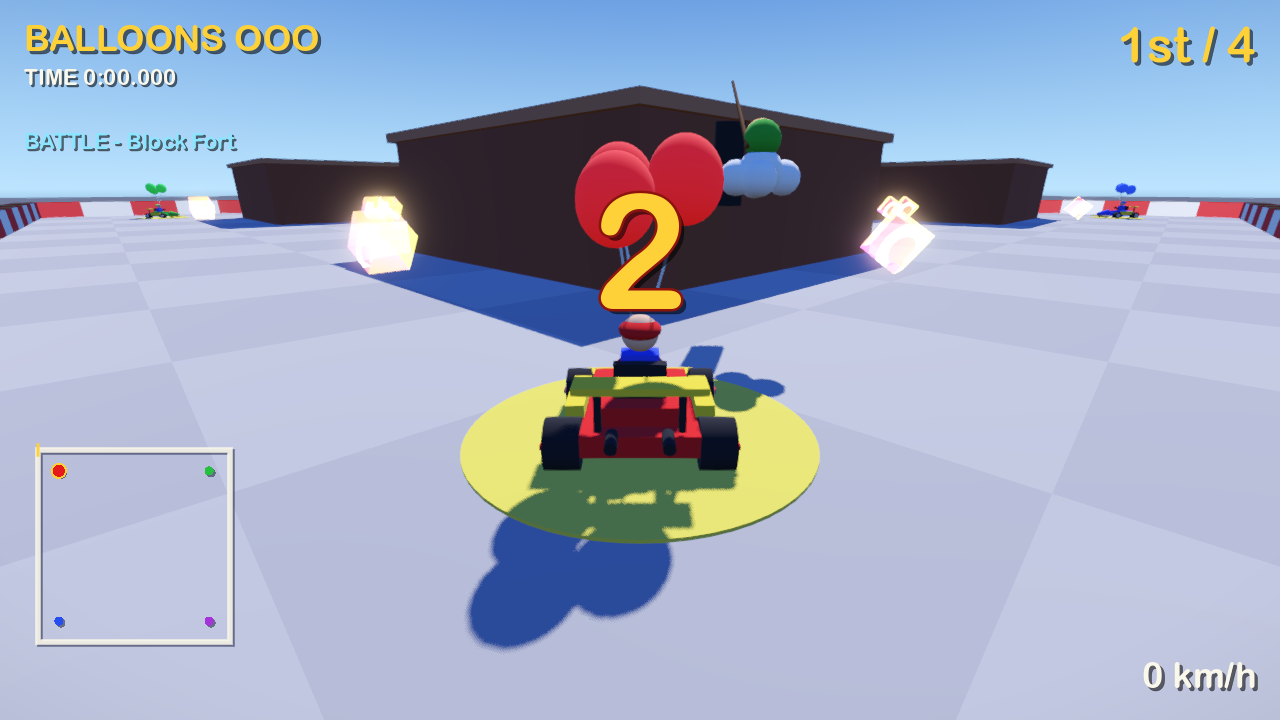
That fifth session started at 14:19 and ran 28 cycles, and nearly every cycle is one Mario Kart 64 thing the agent looked up and then built. The structure of the game came first: an 8-racer field on a two-column grid, rubber-banding per difficulty, 50cc, 100cc and 150cc plus the mirrored Extra class, Light, Medium and Heavy karts that shove each other, and a Grand Prix with 9/6/3/1 points and the rank-out rule. Then the other modes: Time Trials with a ghost, and Battle mode with balloons in Big Donut, Block Fort and Skyscraper. Then the item set filled out with triple and golden mushrooms, the fake item box, the banana bunch, Boo, triple red shells and shell blocking, with Lakitu arriving to call the false start, wave the start signal and hold up the lap signs.
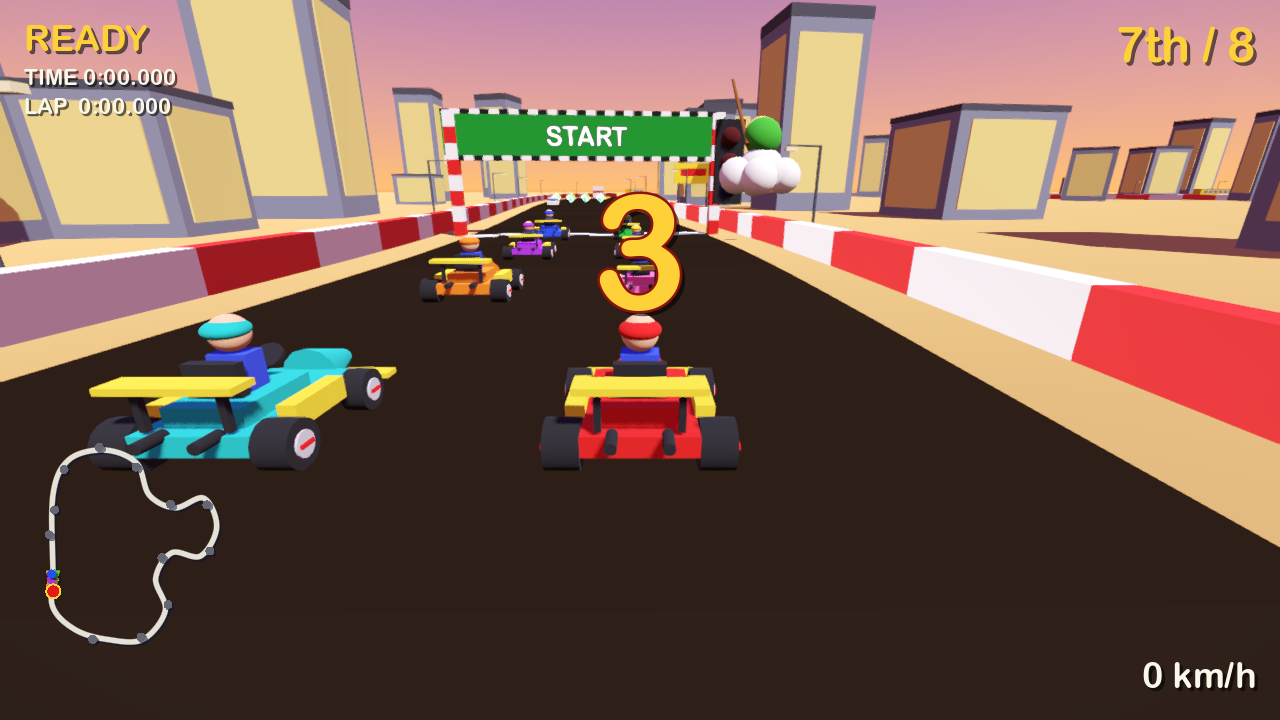
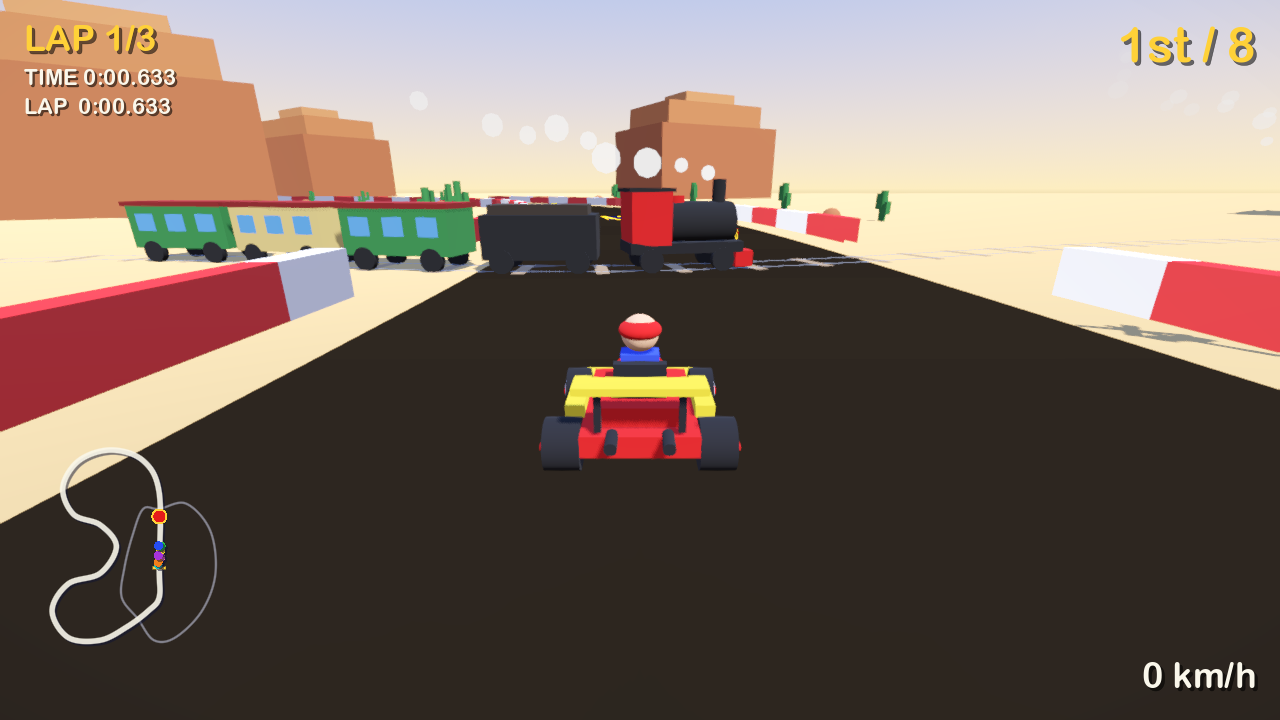
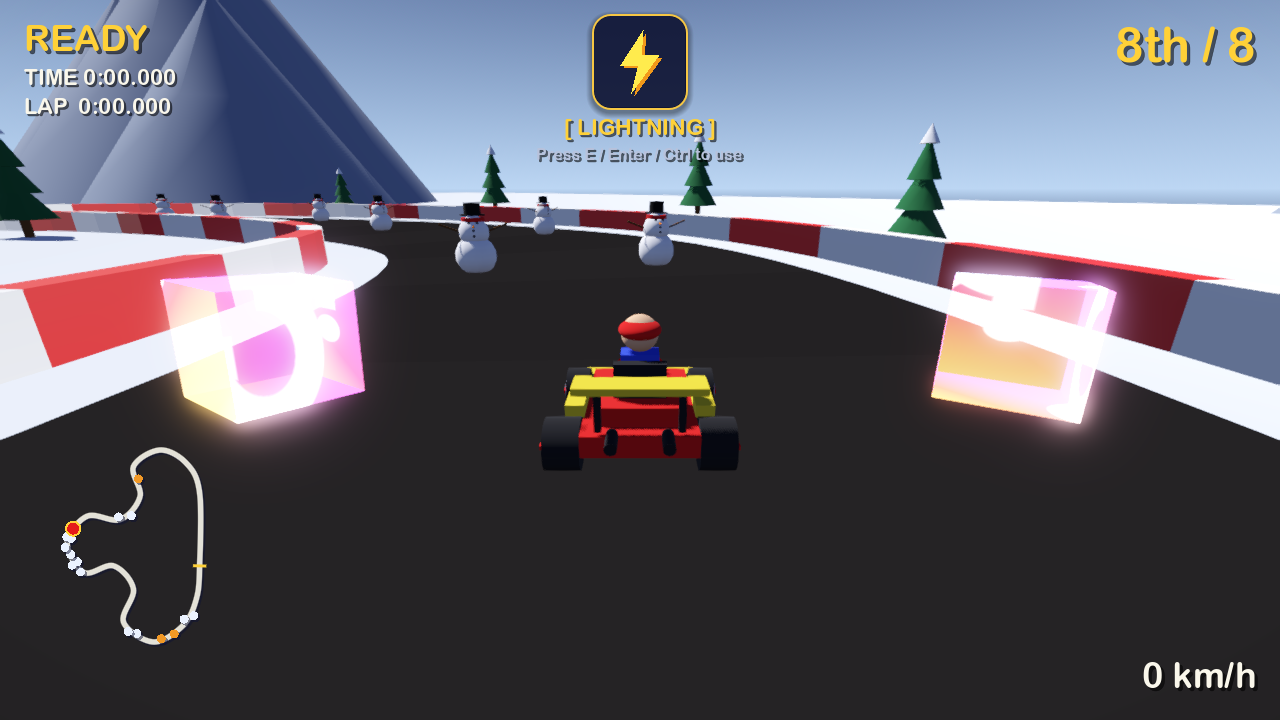
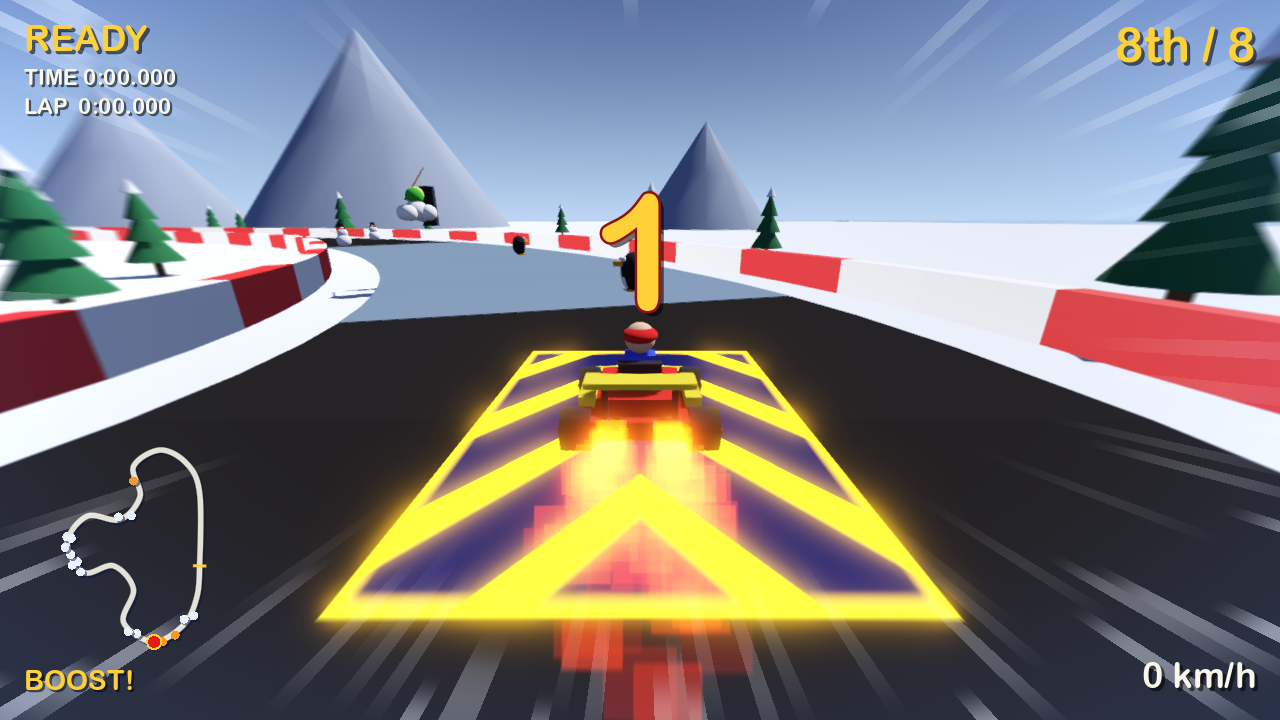
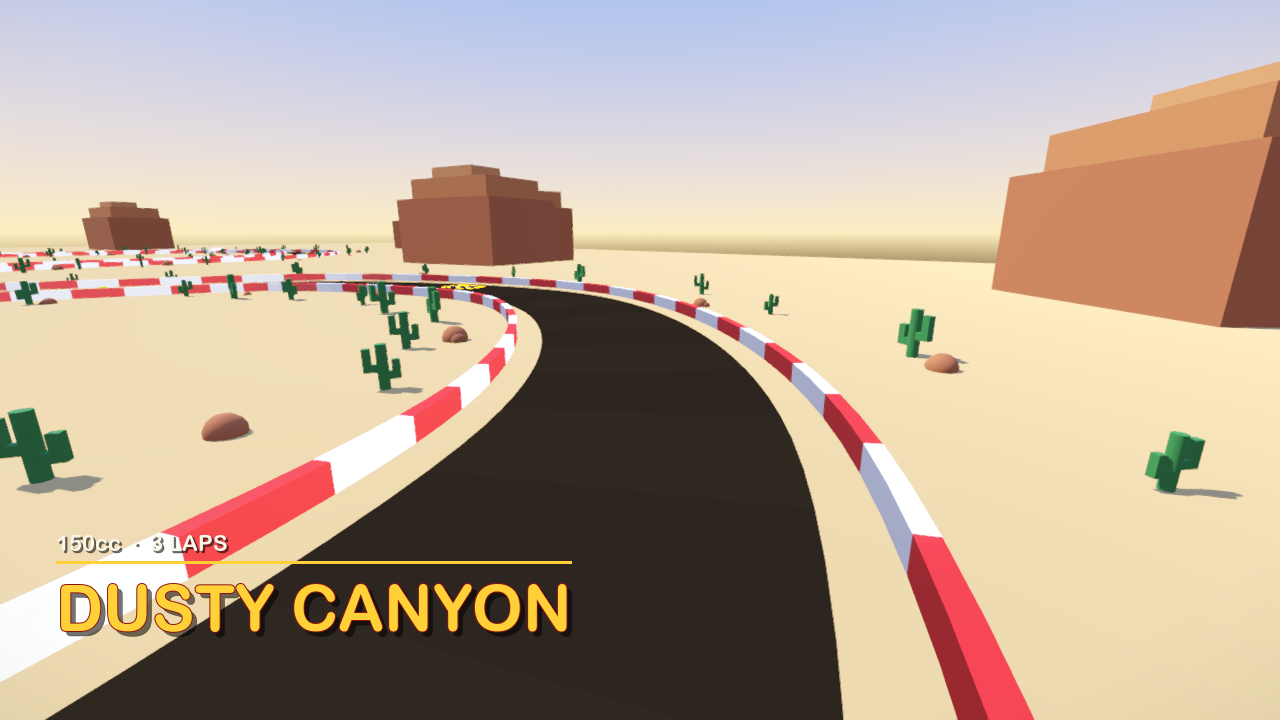
The rest of the afternoon went into the courses themselves. A fourth one, Dusty Canyon, came with a Kalimari Desert style train and level crossings. Sunset Speedway picked up Toad's Turnpike traffic. Frosty Peaks got Sherbet Land ice, snowmen and penguins, Green Hills got Monty Moles, and every course got roadside scenery to match its theme, along with the slipstream, a jump ramp, the hop-and-toggle powerslide, and a chiptune loop rendered from step patterns in code.
Four hours in, at 18:25, I opened a second tab and started a second Auto-Pilot on the same repository, with a narrower goal:
the menus are not Mario Kart Quality and neither is the title shot. and there is over use of black outlines on text everywhere. see Mario Kart 64 screenshots and images on the web and make better menus. focus only on the menus / screens and title shot for GoKart. make conscious decisions. do not conflict with previous /auto working on the application
So from 18:25 to midnight, two agents were committing to the same working tree. The menus session rebuilt the title screen around an arched gradient logo that flies in and bounces, then worked its way through every screen behind it: a select screen with a picture beside each course and a live fly-over of the one you've picked, option rows with lit bars, a turning kart portrait and a gold cursor, a course intro fly-over before each race, a pause screen, and a results board whose rows slide in one after another. Under all of it went a shared palette of rounded gold-and-cream text with drop shadows, which replaced every 8-pixel black outline in the game. It ran 23 cycles and declared the goal reached at 23:54.
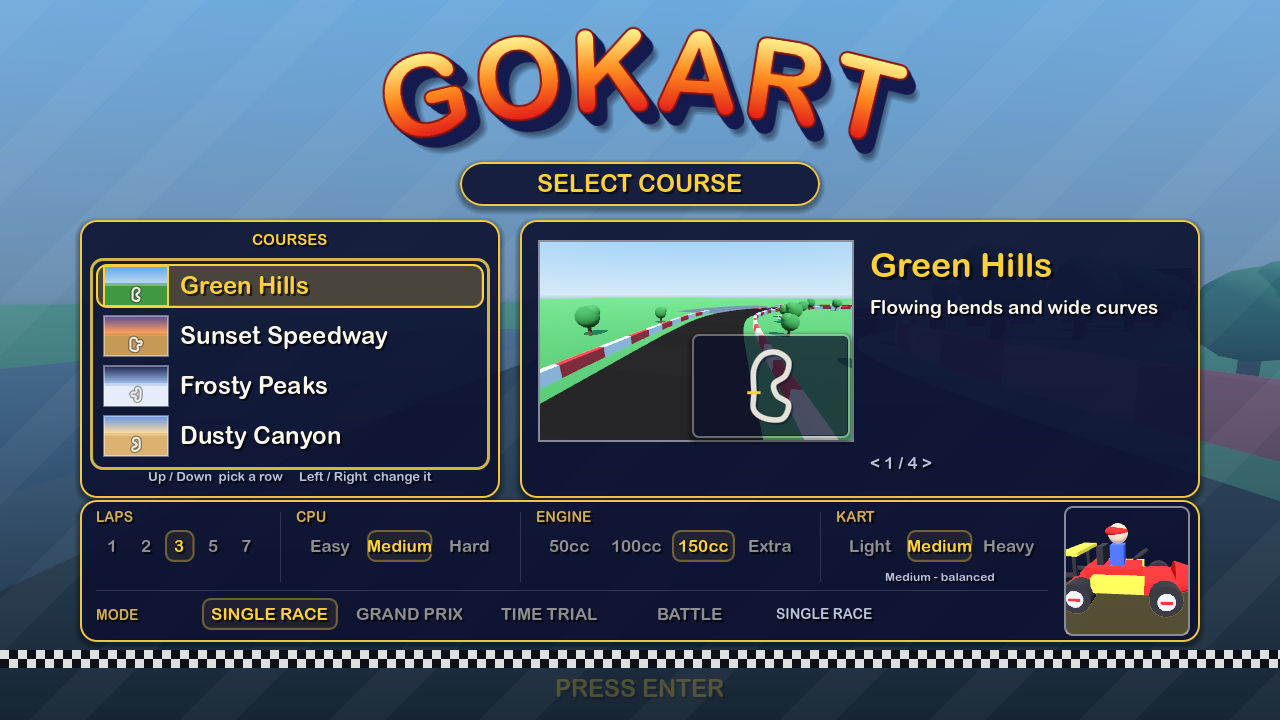
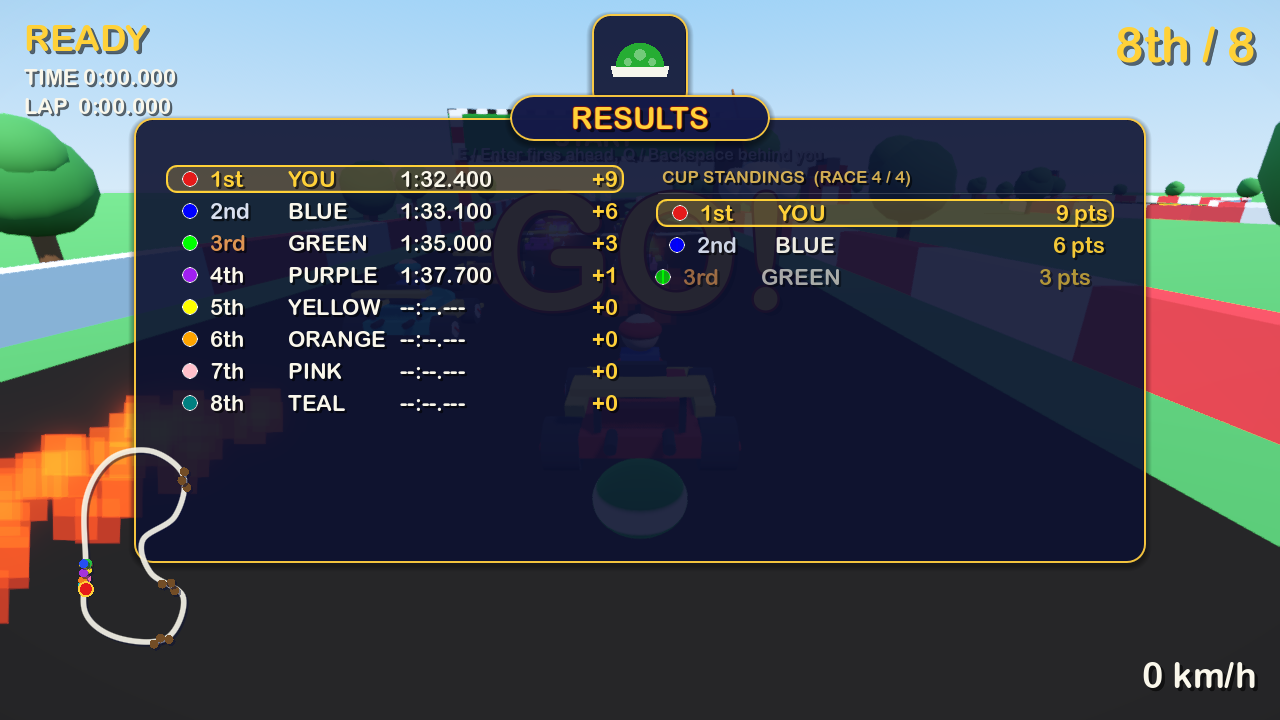
The "do not conflict" line did real work. The log is full of the two sessions working around each other. The menus session verified from a clean git worktree at HEAD so that "the other session's in-flight penguins work" stayed out of its test runs. When I asked, one session finished the other's half-done feature. Commits were staged file by file instead of with git add -A, because the other tab's edits were sitting in the same tree. It wasn't tidy, but nothing was lost, and the suite ended the night at 14,134 passed, 0 failed.
The feature session's log ends three minutes after the menus session's, at 23:57, with "Session ended — Stop All". My note to Agent! straight afterwards, which it saved as the message of the next checkpoint commit, was that Stop All needs to stop only the tab it's pressed in, not all of them. With two Auto-Pilots running, one button for both is the wrong button.
About these screenshots
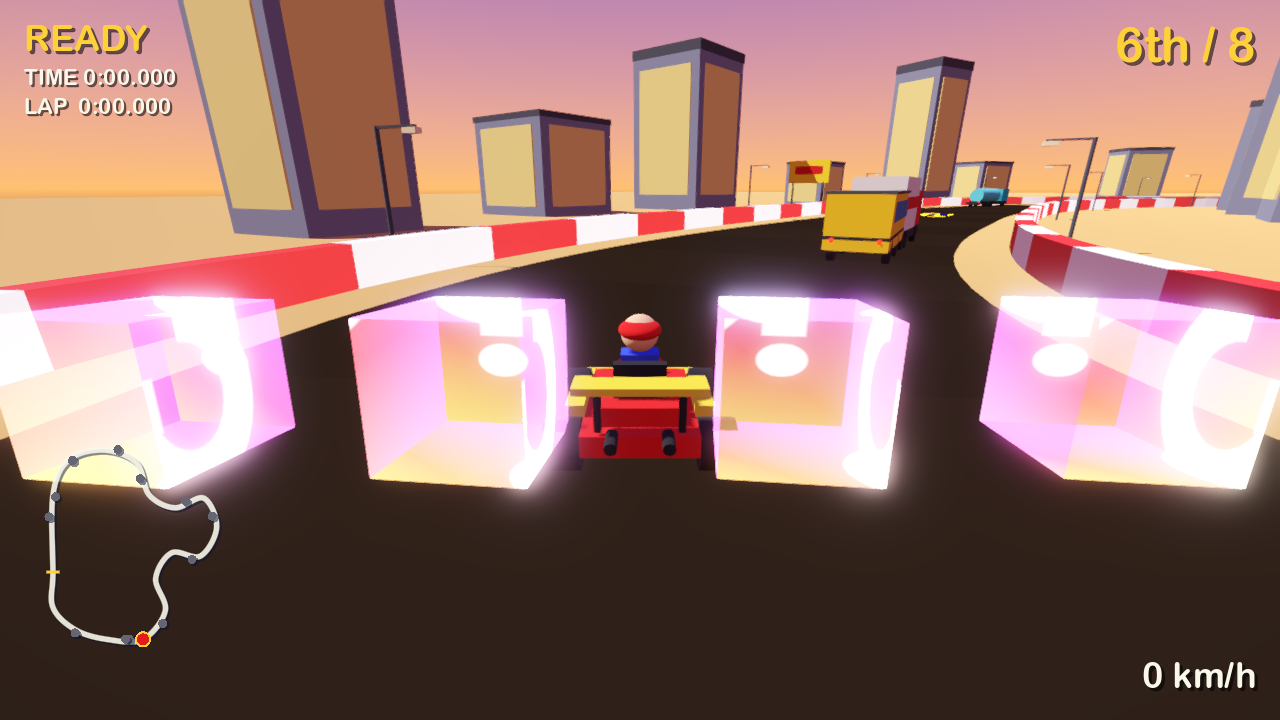
Agent! took them, not me, and not by hand. For the first version of this post I asked for three screenshots of a random drive, and it wrote a 70-line tools/random_drive.gd that follows the road with a wandering lane offset, throws in random drift bursts, fires whatever item it's holding at random moments, and saves a frame every few hundred physics frames. The Sunset Speedway shot above is a frame from that bot.
The rest come from the shot tools each feature shipped with. There is one for the menus, one for the course intro, one for the train, one each for the traffic, the snowmen and the penguins, one for the HUD and one for Battle mode, and each stages its scene, waits for the right frame and saves it. All of them were run for this update from a clean worktree checked out at the v0.0.2 tag, so nothing uncommitted is in a picture.
Agent! still can't look at the result, so the tools sample pixels instead. The ice shot prints the road colour ahead on ice against tarmac, the pause shot proves nothing moved outside the panel for a second, and before publishing I had it count pure-black pixels in all ten pictures above: zero in each. There are more in the GoKart README.
What I'd tell you before you try it
- Run it in git. Auto-Pilot has no undo. GoKart's log is readable because every cycle ended in a commit, and the one time a cycle went sideways, nothing was lost.
- Put the operational rules in the goal. "Put a time limit on shell" worked better as part of the goal than as a one-off message, because every new cycle re-reads the goal.
- Expect it to ask for eyes. For anything visual or about feel, the loop will stall honestly rather than lie. Budget a playtest between sessions, and feed your notes back in as the next goal.
- Stop All is part of the workflow, not a failure. The first three GoKart sessions all ended with it.
- Two Auto-Pilots in one repo works, if you tell them about each other. "Do not conflict with the previous /auto" went into the second goal, and both sessions spent real effort staying out of each other's way. Give them separate areas of the code, and expect the one you stop to take the other with it for now.
Is that good?
I asked Agent! that question after it had read the repo, counted the commits and found the Auto-Pilot log. Its answer, unedited:
It depends on what you want out of it. As a showcase of what Auto-Pilot can do, it's impressive. Twenty-three plus cycles produced four courses, items, AI racers, Grand Prix, Time Trials, Battle mode, procedural music and sound, all with no imported assets, and a README that documents it in detail. That's a lot of working software from a single goal statement.
It also added a caveat: no human reviewed the code along the way, so quality was judged by the agent's own verification logs, and since it hadn't played the game or audited the code, it couldn't say how well it actually plays. Which is the same conclusion the log reached on its own. The next step is a playtest.
GoKart 0.0.2
You don't need Godot to try it. GoKart 0.0.2 is the second packaged release, exported from the same repo, 87 commits after 0.0.1:
- macOS universal (Apple silicon and Intel), signed with a Developer ID and notarized by Apple
- Windows x86_64
- Linux x86_64 and arm64
Each download is a single self-contained binary with the game data embedded, and SHA256SUMS.txt is on the release page if you want to check what you got. The Windows build is unsigned, so expect the SmartScreen prompt. Everything described above that wasn't in 0.0.1 is in 0.0.2, from Battle mode and Time Trials to the train, the traffic, the new menus and the restyled HUD; the release notes have the full list.
Agent! 1.1.87 with Auto-Pilot is on the releases page and in Homebrew. If you'd rather run GoKart from source, it needs Godot 4.4 or later: git clone https://github.com/AgentiLoop/GoKart.git && cd GoKart && godot --path .